 EN
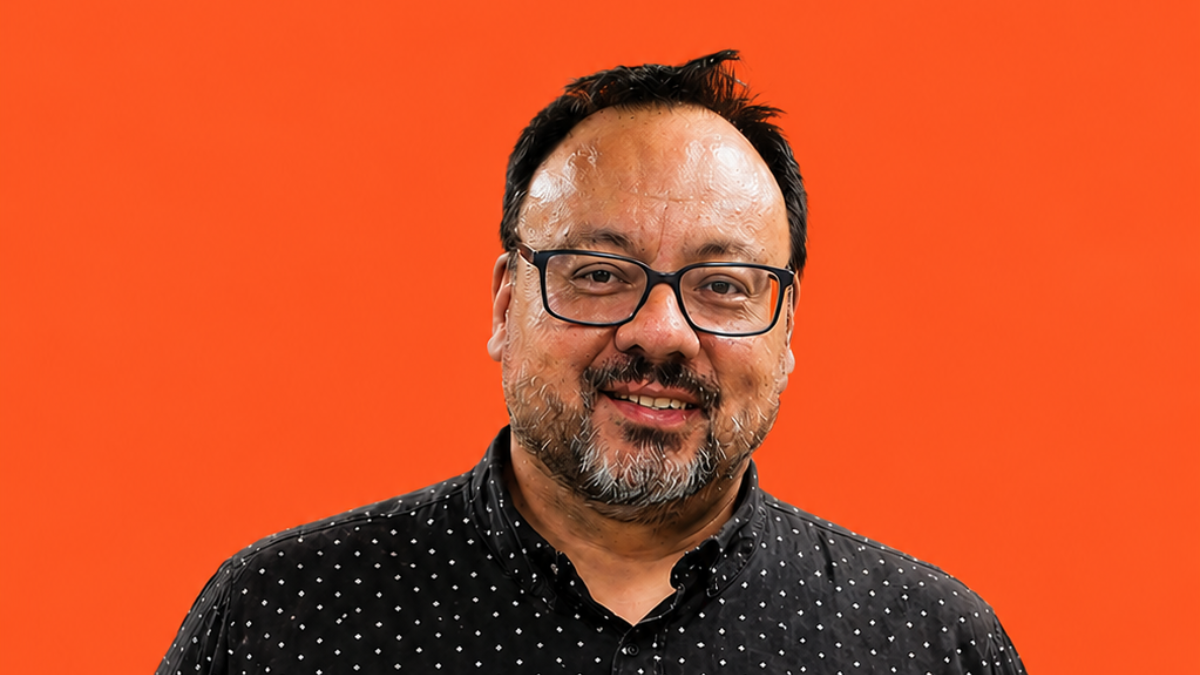
EN Turning Vision into Reality: Reflections from Talent Connect 2025 by Ivan Neves, CHRO Taking
Ensuring high availability and 24x7 operational security, the operation is managed by a dedicated team and involves preventive and corrective maintenance and critical infrastructure certification.

This was my third participation in Talent Connect, the global LinkedIn event that brings together People, technology, and business leaders. I attended Los Angeles in 2022, Phoenix in 2024, and now San Diego. This year's theme, Turning Vision into Reality, nicely sums up the current moment in the world of work: after so much talk about the future, it seems the time has come to learn how to put it into practice.
Talent Connect is, in a way, a mirror of what LinkedIn itself is prioritizing and how the global HR community perceives its biggest challenges. It was once a more conceptual event, full of big ideas about tomorrow. Today the focus seems to have shifted toward something more tangible. It's less about the next big trend and more about how to truly transform the way we lead, hire, and develop people.
Beyond bringing together reflections and debates about the future of work, the event also serves as a stage for LinkedIn to present its new solutions. This was the case with the Career Hub, which has evolved significantly since last year and now allows professionals to explore new career possibilities inside and outside their companies, combining skills data, job openings, and learning. And the Hiring Assistant, an artificial intelligence agent created to support recruiters throughout the entire hiring process.
The Hiring Assistant automates and assists recruitment tasks, such as creating job descriptions from notes, searching and screening candidates, and sending personalized messages. It learns from recruiter interactions to refine its suggestions and make the hiring process more efficient. It works as follows: transforms ideas and notes into optimized job descriptions, analyzes thousands of profiles quickly based on criteria defined by the recruiter, sends personalized messages to engage candidates, and continuously improves with use. The result is a more automated, agile, and accessible process that frees recruitment professionals' time to focus on what truly matters: understanding people and making more strategic decisions.
These launches show that LinkedIn is advancing consistently in the integration between AI and talent management, making its platforms more intelligent and personalized. But they also highlight an important challenge: the adaptation of these tools to the reality of markets outside the United States–Europe axis. Two points stand out. The first is price. For Brazil, the cost of tools such as Career Hub and the Hiring Assistant is still well above the average that small and medium-sized companies can invest. And this is a point that LinkedIn will need to rethink if it wants to expand its corporate client base in a country that has one of the highest engagement levels on the platform in the world. Today Brazil holds the third position in the global LinkedIn user ranking, behind only the United States and India, with more than 83 million users, potentially reaching 89 million in more recent surveys. Moreover, the country is considered the second most relevant in engagement, which highlights the strategic importance of the Brazilian market for the platform.
The second point is language. There is still no full Portuguese support for several of the new features presented, making the use of the tools more difficult, especially for companies that operate exclusively in Brazil. In a market where many recruitment and development processes are still conducted in Portuguese, this is a real limitation. If LinkedIn wants to strengthen its local presence and relevance, adapting its solutions to the Brazilian language and context is an essential step. It would be a way of acknowledging the size and potential of the audience that most believes in and uses the platform.
These reflections show how the global landscape and local context connect. The great discussions about the future of work only make sense when we can bring them to our own reality. And perhaps that is the greatest merit of Talent Connect: provoking this kind of questioning.
Looking back, it's interesting to see the evolution of the event's narrative over the years. In 2022, in Los Angeles, the world was still emerging from the pandemic and companies were trying to rediscover themselves. The main tone was centered on people and rebuilding work relationships. There was a lot of talk about skills-first, about the transition from a role-based market to a skills-based market, and about the role of HR in internal mobility and employee well-being. There was a genuine search to reconnect culture, purpose, and belonging after a period of global disruption. The central message was clear: rebuild starting with people.
In 2024, in Phoenix, the focus was on the era of artificial intelligence, with an approach of innovation and adaptability. The main discussion revolved around how generative AI was transforming recruitment and development, helping HR professionals focus on higher-value human tasks. The skills-first approach remained strong, now supported by AI-based mapping and learning tools. There was also a lot of talk about adaptive leadership, inclusion, and the need to create cultures of continuous growth. It was an optimistic event, focused on technological transformation without losing sight of people.
We then arrived at 2025, in San Diego, with a more mature and pragmatic climate. Conversations turned to execution. It's no longer enough to talk about the future of work or AI in recruitment: it's time to understand what actually works and what generates real impact within companies. The tone is one of consolidation, not euphoria. Vision has been turned into practice.
One point, however, stood out in this edition. The presence of LinkedIn's top executives and product leaders was more discreet than in previous years. Ryan Roslansky, Chief Executive Officer (CEO), LinkedIn, always very present in the openings and panels of past editions, did not participate in any presentation this year. His absence was noticed among participants, especially those who have followed the event for a longer time. Another important name who did not take the stage was Hari Srinivasan, Vice President of Product, LinkedIn, responsible for the Talent Solutions and Learning areas. He is one of the company's most technical and strategic voices, with strong involvement in the integration between AI, learning, and talent experience. This year, according to reports, he only participated in executive meetings with major clients, but did not appear in open event sessions. The one who took center stage in institutional speeches was Daniel Shapiro, Chief Operating Officer (COO), LinkedIn, who was present in several relevant presentations and well represented the brand's strategic vision. His presence brought consistency and clarity to the event's central message.
One of the most talked-about moments in the program was the conversation between Demi Moore and Jessica Jensen, Chief Marketing & Strategy Officer, LinkedIn. Under the title “In Her Power”, the actress reflected on her journey of perseverance, authenticity, and the process of rediscovering herself after years in the spotlight. It was an honest and personal conversation, centered on self-worth and inner strength. Although it was inspiring and conducted with sensitivity, the conversation stood somewhat apart from the more technical and practical focus of the event. Amid discussions about AI, data, and organizational transformation, the presence of a Hollywood figure brought an emotional tone that not everyone was able to connect to the central theme of Turning Vision into Reality.
Among the presentations that impressed me most, Lars Schmidt, Founder of Amplify and author of the book Redefining HR, brought a talk very aligned with the current challenges of leadership. Recognized globally for his work in modernizing HR practices and promoting more human and adaptable organizational cultures, Lars highlighted the importance of trust in times of uncertainty. He reminded us that, in the face of so much volatility, the role of leaders is not to provide all the answers, but to ensure that people feel safe enough to continue believing in the direction of the company. It was one of the most relevant talks at the event for connecting leadership, culture, and reality with clarity and depth.
Susan David, psychologist and professor at Harvard University, reinforced the importance of emotional courage and discomfort as part of the change process. And Karin Kimbrough, Chief Economist, LinkedIn, brought a balanced view of the impact of AI, showing that technology is not replacing jobs, but redesigning functions and demanding a new learning mindset.
As someone who has followed Talent Connect in three cities and very different moments of the global economy, I notice that the event reflects the transformations of the market itself. In 2022, the focus was on rebuilding and humanity. In 2024, innovation and adaptation. In 2025, consistency and execution. The journey makes sense.
I returned from San Diego with a different feeling. Not enchantment, but focus. Talent Connect remains relevant not so much for the shine of the novelties, but for showing the tone of conversations that will still shape the market in the coming years. The trends are no longer on stage, they are in the connections, in the exchanges between professionals who are trying to solve the same challenges in different contexts.
Turning vision into reality is the challenge for all of us who lead people and businesses. It's about choosing consistency over fad, about sustaining the new when it is no longer novel, and above all, about continuously learning. Because, in the end, true innovation happens when ideas leave presentations and become part of people's daily lives.
Related content
Agentic AI in Practice: What's Changing in the CIO's Role
Agentic AI is redefining the role of the CIO. Beyond task automation, the challenge is to orchestrate people, AI agents, context, and governance to build smarter, more... Read more.
Claude Partners Network - Anthropic and Grupo Taking
We have integrated Claude into our ecosystem and TATe AI, with a goal of having 100 certified consultants by the end of 2026. Learn more about the partnership and what it delivers.

In the competition for IT talent, the job opening is no longer the focal point.
Taking has repositioned its Talent division to place the person, not the job opening at the center. Learn about the strategy that combines experience, business intelligence, and AI.