 EN
EN What CIO Brasil 2026 Teaches Us About UtopIA: When the Process Demands Orchestration
We are living the most promising moment in the history of artificial intelligence in companies. And, at the same time, one of the most dangerous.
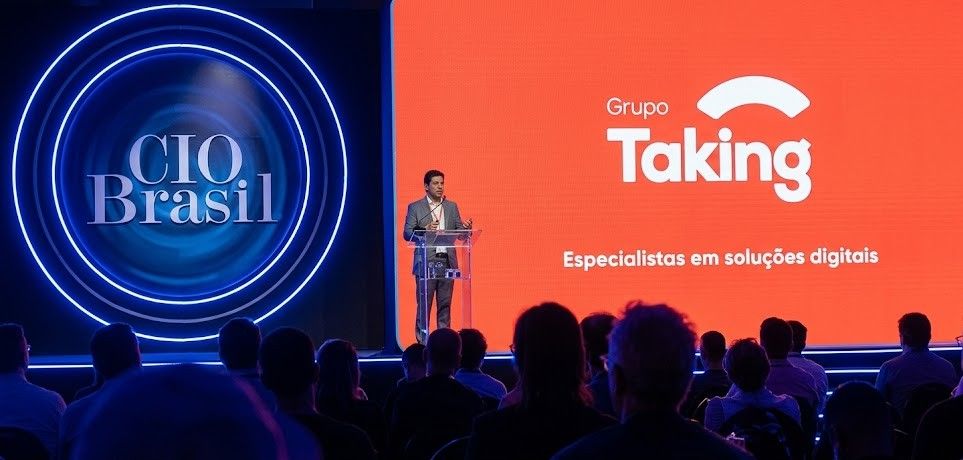
We are living the most promising moment in the history of artificial intelligence in companies. And, at the same time, one of the most dangerous.
Not because the technology fails. But because it advances faster than organizations' ability to govern it.
Between evolution and contradiction
We have never had so many tools available. Cloud, centralized data, autonomous agents, generative models — the companies' technology stack grows at an exponential pace. But growth without structure is not evolution. It is an accumulation of risk.
About 70% of digital transformations fail to generate sustained impact — not due to technical limitations, but due to disconnection from critical processes and decision-making models Globalsys, according to a survey with multinational backing. The problem is rarely in the tool. It lies in the absence of a strategy to sustain it.
The risk nobody wants to admit
AI, by nature, is not deterministic — especially in generative models, where there is a real risk of inconsistency, misinterpretation, and even "hallucination." This is not a defect; it is a characteristic of the technology. The problem begins when this characteristic is ignored within business processes that require precision, traceability, and compliance, warns Fernando Baldin, Country Manager LATAM at AutomationEdge, in the Portal Information Management.
And studies confirm: most AI initiatives do not fail due to technological limitations, but due to challenges of integration, governance, and practical business application. TIINSIDE
Orchestrating is not complicating. It is guaranteeing that it works.
Orchestration is not just organizing tasks — it is creating a governance layer over AI's performance. It is defining how it executes, in what sequence, with what validations, and under what rules. It is ensuring that the result is not only fast but reliable.
In practice, this means:
- Governed data: quality, traceability, and controlled access from the foundation
- Planned integration: systems that communicate by architecture, not by improvisation
- AI with guardrails: agents that operate within defined and auditable parameters
- Cloud as strategy, not as "a server outside the office," but as a business platform
Progress with responsibility
The brave new world of AI is not one where everything is automated. It is one where everything is governed.
In 2026, the CIO stops being just an enabler of innovation and becomes an orchestrator of sustainable technological decisions. Deciding what to scale, what to integrate, and what to discontinue becomes a strategic business decision, according to a study by TIINSIDE and a trend analysis by Publicis Sapient.
That is the turning point that separates companies that grow with technology from those that grow despite it.
How Taking thinks about this in practice
With 30 years of experience in complex corporate environments, we operate precisely at this intersection: technology that works because it was designed for the business, not for the portfolio.
This positioning has external backing. Gartner, through the ISG Provider Lens™ 2025, recognized us as Rising Star in AI-driven ADM, highlighting our ability to develop AI-driven applications within the Oracle ecosystem. We are also Oracle Service Partner with double Expertise seal: Cloud Platform Integration and Cloud EPM, two pillars directly linked to system orchestration and data centralization with governance.
And TateAI, our proprietary applied AI platform, was built with this principle at its core: agents that operate within defined parameters, with traceability, auditing, and focus on measurable ROI.
Governance, integration, and results are not differentiators. They are the starting point.
If your company is navigating this scenario and wants to structure the journey with method and security, it makes sense to talk.
Related content
Agentic AI in Practice: What's Changing in the CIO's Role
Agentic AI is redefining the role of the CIO. Beyond task automation, the challenge is to orchestrate people, AI agents, context, and governance to build smarter, more... Read more.
Claude Partners Network - Anthropic and Grupo Taking
We have integrated Claude into our ecosystem and TATe AI, with a goal of having 100 certified consultants by the end of 2026. Learn more about the partnership and what it delivers.

In the competition for IT talent, the job opening is no longer the focal point.
Taking has repositioned its Talent division to place the person, not the job opening at the center. Learn about the strategy that combines experience, business intelligence, and AI.