 EN
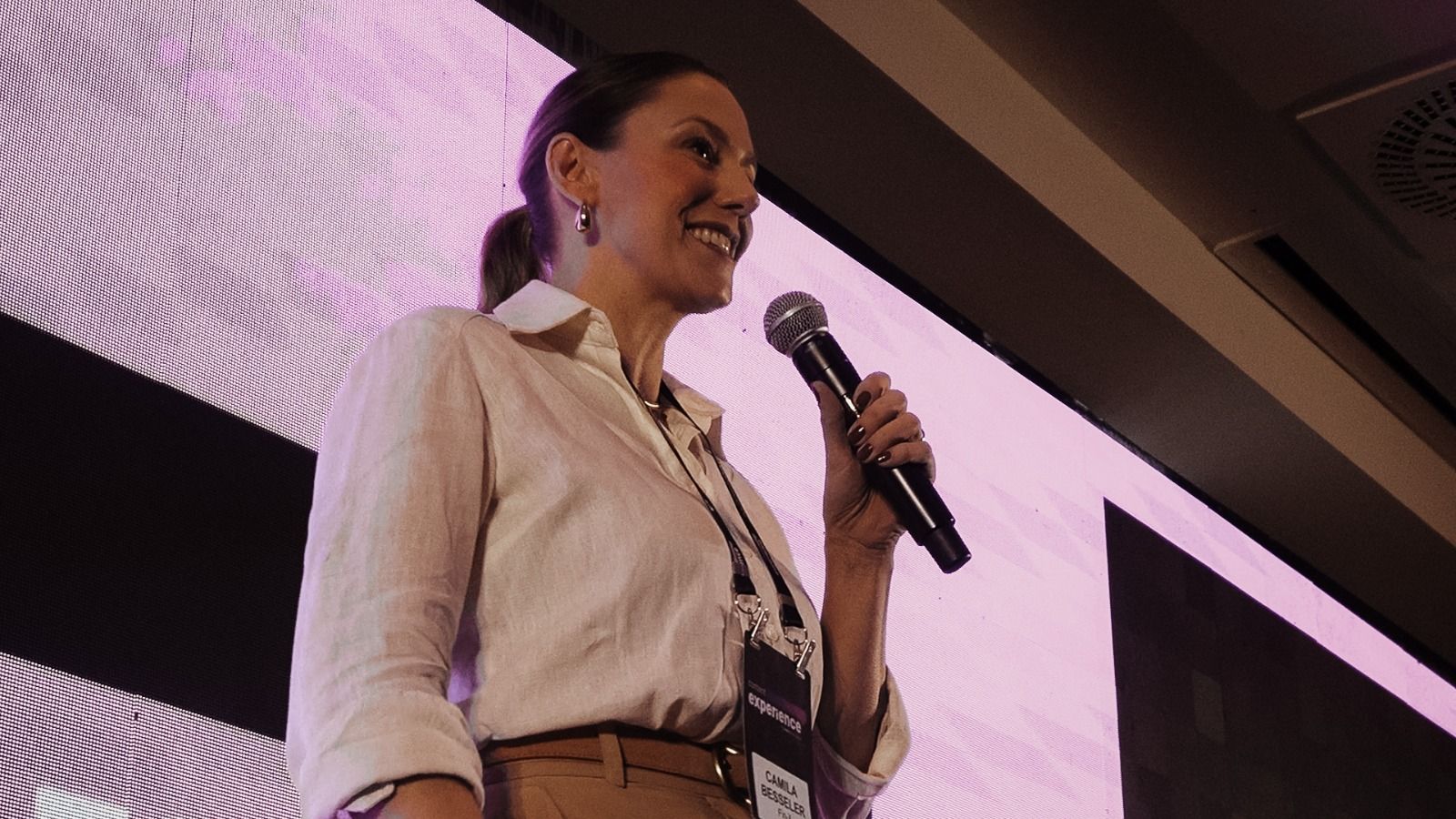
EN The New Game of Product Leadership: AI in Complex Operations by Camila Besseler
Synthetic data in market intelligence: the real use beyond the hype.
The discussion about artificial intelligence in companies has matured. If a few years ago the focus was on point efficiency — automating tasks, reducing costs, speeding up responses — today the challenge is different. AI has ceased to be an additional layer of technology and has begun to act as the cognitive infrastructure of organizations.
In this new scenario, complex operations — those involving multiple systems, interdependent decisions, regulatory risks, and direct business impact — have become the main proving ground for AI maturity. And, along with them, a new game emerges for leaders responsible for products, platforms, and operations.
It is no longer about implementing AI. It is about leading intelligent systems in real, dynamic, and imperfect environments.
The end of functional leadership and the rise of systemic leadership
The adoption of AI has exposed a clear limit of traditional product and operations leadership models: functional and linear logic. In complex environments, isolated decisions generate side effects. The new leadership game is not technological — it is systemic.
AI amplifies this effect. Models learn, adapt, and influence processes at scale. When poorly orchestrated, technology does not just make mistakes — it propagates the error.
For this reason, the role of leadership changes structurally. The product leader ceases to be just the translator between business and technology. They begin to act as an orchestrator of intelligent systems, responsible for:
- Defining where AI should act and where it should not
- Establishing clear boundaries between automation, recommendation, and decision
- Ensuring coherence between strategy, data, models, and operational impact
This is a less operational and more architectural form of leadership.
AI in complex operations: the infinite game
Complex operations are, by definition, exception environments. Processes are not entirely predictable, data is imperfect, and decisions involve constant trade-offs. That is exactly where AI promises the most — and where it fails the most when poorly managed.
Recent market experience shows a recurring pattern: organizations that try to scale AI without rethinking their operational models end up with technically sophisticated, but strategically fragile systems. Technology advances faster than the capacity to govern it.
The new game requires product and operations leaders to ask different questions:
- What decision are we trying to improve — and what risk are we willing to take?
- How does the system learn over time and who is accountable for that learning?
- What happens when the model makes a mistake — and it will make mistakes?
Mature AI is not the one that is always right. It is the one that makes mistakes in a controlled, auditable, and reversible way.
Product, data, and expertise: rethinking human value
One of the most common misconceptions in AI adoption is treating human knowledge as replaceable. In practice, we see the opposite: the more advanced the AI, the more valuable expertise becomes. But not just any expertise.
The competitive advantage becomes the human capacity to:
- Formulate good questions
- Define quality and relevance criteria
- Interpret results in light of context, culture, and strategy
AI expands analytical capacity, but does not create meaning on its own. In complex operations, the value lies not just in the model's output, but in the curation of the decisions it informs.
Product leaders therefore need to rethink the design of their teams. Fewer isolated specialists, more collective intelligence that combines technology, business, data, and systemic vision.
Governance as competitive advantage — not as a brake
Another inflection point in this dynamic is governance. For a long time, governance was seen as a barrier to innovation. In AI, it becomes exactly the opposite.
Models operating at scale, without clear validation, monitoring, and accountability criteria, create reputational, operational, and regulatory risks that are hard to reverse.
Companies that treat governance as part of the product design — and not as a later layer — are able to:
- Scale AI more safely
- Learn faster from mistakes
- Build internal and external trust
In complex environments, trust is an operational asset.
Less control, more discernment
Perhaps the greatest change is cultural. Leading AI in complex operations is not about exercising more control, but about exercising better discernment.
This implies accepting that:
- Not everything will be predictable
- Not every decision can be automated
- Not every efficiency gain compensates for a loss of understanding
The role of leadership becomes defining principles, boundaries, and priorities — and allowing intelligent systems to operate within those contours. It is a leadership less based on command and more based on decision architecture.
Leadership as design of possible futures
The true impact of AI is not in the technology itself, but in the way it redesigns decision structures, operational models, and leadership roles.
In the new leadership game in products and operations, the winner is whoever understands that AI is not a project, but a living system. A system that learns, influences, and transforms. Leading in this context means assuming responsibility not only for results, but for consequences. Not only for the short term, but for the sustainability of decisions.
In a world increasingly driven by intelligent systems, the competitive advantage will not lie in who adopts AI first — but in who knows how to lead it better.
Related content

Agentic AI in Practice: What's Changing in the CIO's Role
Agentic AI is redefining the role of the CIO. Beyond task automation, the challenge is to orchestrate people, AI agents, context, and governance to build smarter, more... Read more.
Claude Partners Network - Anthropic and Grupo Taking
We have integrated Claude into our ecosystem and TATe AI, with a goal of having 100 certified consultants by the end of 2026. Learn more about the partnership and what it delivers.

In the competition for IT talent, the job opening is no longer the focal point.
Taking has repositioned its Talent division to place the person, not the job opening at the center. Learn about the strategy that combines experience, business intelligence, and AI.