 EN
EN Taking at IT FORUM Accelerates Growth and Aims to Enter Top 10 in Brazil's Technology Sector
Ensuring high availability and operational security 24x7, the operation is conducted by a dedicated team and involves preventive, corrective maintenance, and certification of critical infrastructure.
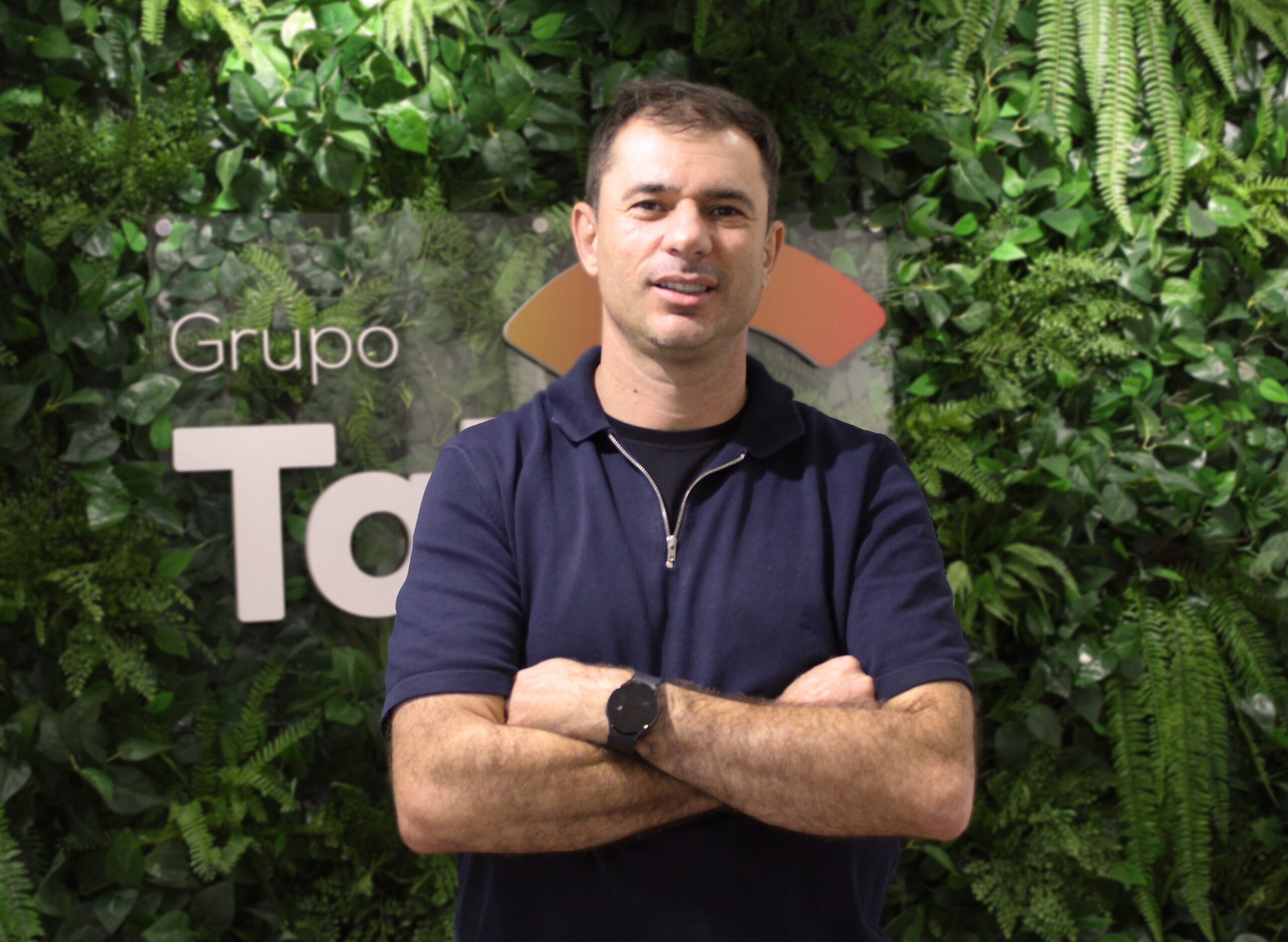
The story of Grupo Taking does not follow the conventional trajectory of technology companies. Under the command of Marco Romero, CEO who started at the company at age 15 as an office boy, the company underwent a profound transformation over the last eight years — and now projects one of the most ambitious growth plans in the sector.
Romero, who was born in Sapopemba, in São Paulo's East Zone, took over 100% of the operation after a shareholder negotiation and led Taking from a company essentially focused on professional staffing to a complete operation of digital services, integration, data, managed squads, and digital workplace projects.
Today, Taking brings together around a thousand professionals, serves approximately 120 active clients — many with more than ten years of relationship — and has positioned itself as the third largest Oracle NetSuite implementer in Brazil.
"We made the decision to go beyond people, but without abandoning our talent DNA. Everything comes down to people," says Romero.
Artificial intelligence as a vector of efficiency
The company's recent turnaround comes with the strategic adoption of artificial intelligence in products and internal processes. Romero approaches the topic pragmatically: "AI is like Batman's utility belt — a toolbox that only generates impact when applied to the right problem."
Taking has incorporated AI into areas such as legal, compliance, HR, finance, and customer service, with impressive results. Contract analyses that previously took weeks are now completed in 24 hours. Complete technical and behavioral recruitment processes are finalized in five business days. Complete squads are delivered in up to 12 days — deadlines considered rare in the digital services market.
From this approach was born TATe AI, a proprietary framework that combines product management and creation with embedded artificial intelligence. TATe has already been used by companies such as Copastur, Ambev, Tele Sena, and Kraft Heinz, and has established itself as Taking's showcase at global events such as Web Summit Rio and Web Summit Lisbon.
"Nobody will lose their job because we became more efficient. AI is for scaling, not for cutting people," reinforces the CEO.
Commercial strategy and customer focus
Operational efficiency has also accelerated the commercial model. Taking works with a clear cross-sell strategy: when a data project is initiated, integration specialists get into action; when Oracle enters an account, the digital delivery team participates; when squads are activated, the data area is mobilized.
The result? 80% of incremental revenue comes from the existing client base — an index aligned with global software and services companies. Taking's NPS is 78%, monitored directly by Romero whenever it falls below 75%.
"When that happens, I myself get into the discussion. It's a long-term relationship," he explains.
Proximity to the client has become a competitive differentiator. Romero cites cases in which he personally worked in war rooms to recover critical projects on weekends. "I've already heard from a client: 'the project is yours because I know you don't run away.' That became part of our identity."
Ambitious goal: top 10 in the sector
With services representing 30% of current revenue, Taking projects reaching 50% in the next three years, driven by operational efficiency, new products, and an active mergers and acquisitions front.
Although he does not disclose revenue figures, Romero reveals that the objective is to grow between 30% and 40% per year — a pace above that of IT consultancies in Brazil, which according to Gartner advance between 12% and 18% per year.
"We did an analysis through the IT yearbook: today we are among the top 120. I want to reach the top 100, 80, 60. And yes, I want to be among the top ten in the sector," he projects.
For this, the company maintains a pipeline of potential acquisitions that complement or expand offering lines. Negotiation cycles vary from eight months to a year and a half, with priority for operations that reinforce services, data, AI, integration, and digital delivery.
"We built a chassis to plug in companies that complement what we do or accelerate an offering line," explains the CEO.
Culture as a strategic pillar
Internal culture has also become a fundamental piece of the strategy. Sixty-five percent of Taking's back office is made up of women, many of them the main income providers in their families. Three commercial directorates are led by women.
"Coincidence or not, they are women. And 80% of them are the engine of the household," Romero highlights, reinforcing that it was not a deliberate goal, but the result of hiring "the best for the position."
Purpose that drives expansion
Romero speaks of the company's goals with the same naturalness with which he tells his origin story. For him, Taking's expansion is not just a corporate objective, but the continuation of a personal logic: giving back to people the same impact that the company brought to his own life.
"Taking changed my life. I want it to change the life of whoever is with me. That is the purpose," he states.
The CEO's belief is that the combination of track record, technological efficiency, operational consistency, and long-term vision positions Taking for a significant leap in an increasingly competitive sector.
The next chapter — entering among the ten largest technology services companies in Brazil — now depends on execution capability, but also on coherence with the trajectory of its leader.
"I learned early that I had no right to fail. That's what I bring to the company," concludes Romero.
Read the article at:
Related content
Agentic AI in Practice: What's Changing in the CIO's Role
Agentic AI is redefining the role of the CIO. Beyond task automation, the challenge is to orchestrate people, AI agents, context, and governance to build smarter, more... Read more.
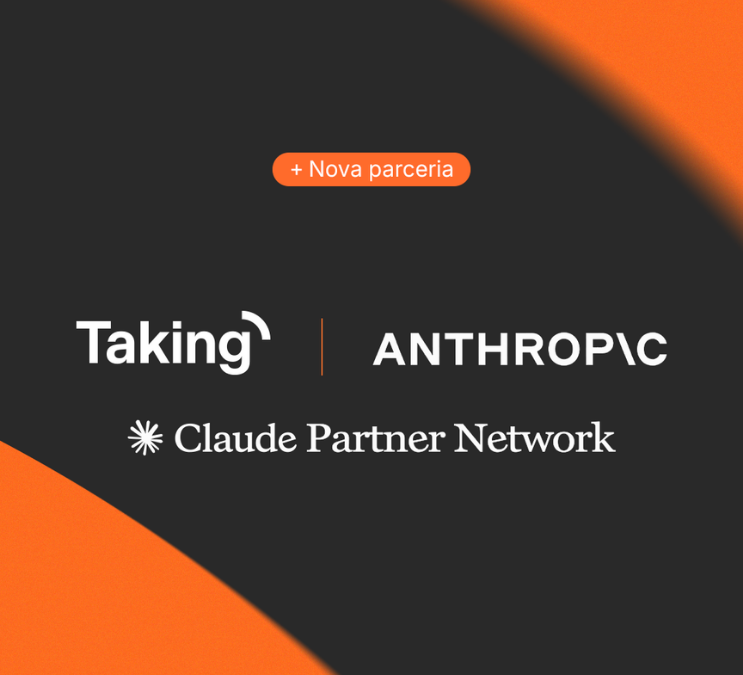
Claude Partners Network - Anthropic and Grupo Taking
We have integrated Claude into our ecosystem and TATe AI, with a goal of having 100 certified consultants by the end of 2026. Learn more about the partnership and what it delivers.

In the competition for IT talent, the job opening is no longer the focal point.
Taking has repositioned its Talent division to place the person, not the job opening at the center. Learn about the strategy that combines experience, business intelligence, and AI.